
 8 months ago
88
8 months ago
88
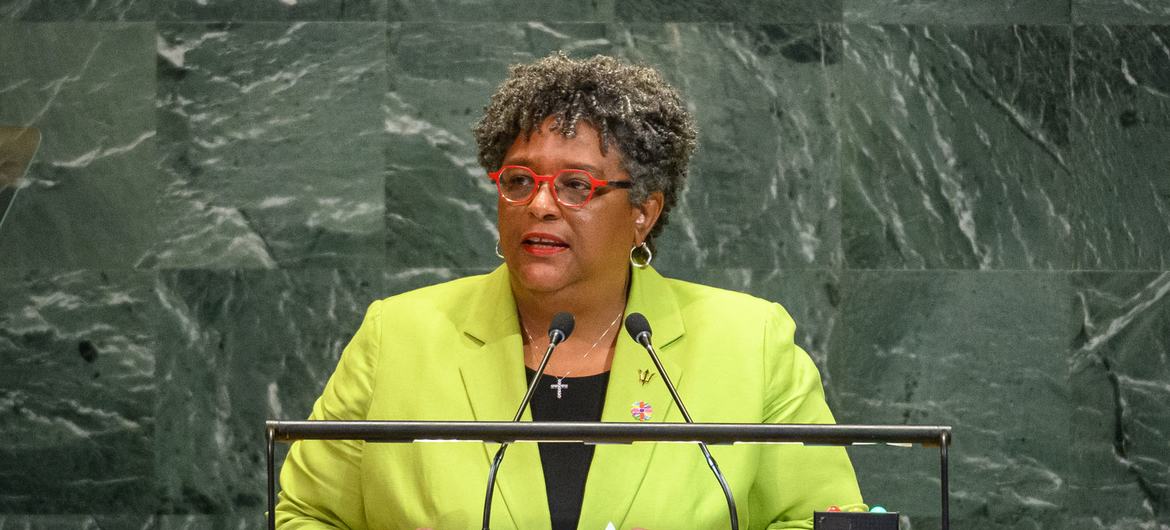
When world media and global institutions compile lists of influential leaders, they rarely include many from Small Island Developing States. In 2025, Barbados Prime Minister Mia Amor Mottley proved not only that the Caribbean can compete on that stage — but that it can lead conversations shaping the future of climate policy, economic justice, and youth empowerment.
For the third consecutive year, Mottley was named to Forbes’ World’s 100 Most Powerful Women, ranking No. 99 among a global roster of political and business heavyweights. The annual list evaluates influence through economic impact, media presence, and policy leadership — and placing in the top 100 underscores just how central Mottley’s voice has become on the world stage.
That recognition didn’t come in a vacuum. Throughout 2025, Mottley continued to amplify Barbados’ leadership on issues that disproportionately affect small islands while expanding the country’s diplomatic reach.
Arguably the most consequential thread through Mottley’s 2025 was climate diplomacy. She was named Global Chair of UNICEF’s Green Rising initiative, an effort aimed at mobilising millions of young people worldwide to address climate change through skills development, sustainable livelihoods, and community resilience. This expanded a programme that had already equipped thousands of youths with training, mentorship, and green-sector opportunities — and linked Barbados directly to a global youth climate network.
Mottley’s climate credentials were further underlined when she was chosen as a 2025 honouree of the Zayed Award for Human Fraternity, an international accolade that recognises leaders fostering peace, solidarity, and substantive action on society’s most pressing issues. The award cited her longstanding work on climate action and her role in pushing innovative financial mechanisms — such as debt-for-climate swaps and reforms intended to expand resilience financing for vulnerable nations.
Barbados also stood out as a finalist for the 2025 Earthshot Prize in the “Fix Our Climate” category, a rare and influential global environmental honour. The nomination highlighted the Bridgetown Initiative — a bold proposal Mottley championed that seeks to reform international financial architecture so that climate-vulnerable states can access capital more equitably and effectively. The initiative has helped shape global climate finance discussions by pushing for debt pause clauses, better use of SDRs (Special Drawing Rights), and more flexible lending structures.
Mottley’s influence was not limited to climate forums. In January 2025, she received one of Suriname’s highest national honours, the Grand Cordon in the Order of the Palm, in recognition of her leadership in strengthening regional ties, deepening economic cooperation, and advancing CARICOM integration. Her leadership was specifically cited for efforts to expand free movement and economic cooperation within the Caribbean Community.
She also won the Winnie Mandela Humanitarian Award — a culturally rooted Caribbean recognition of her advocacy on behalf of Small Island Developing States and her ability to connect climate justice to broader themes of equity, dignity, and global solidarity.
Beyond formal titles and trophies, Mottley’s presence in global forums helped anchor Barbados — and the Caribbean — in conversations about climate adaptation, economic reform, and youth inclusion. Her sustained push for 100 per cent renewable energy by 2030, greater access to climate finance, and equitable global policy frameworks collectively have made Barbados a case study for resilience and innovation among island nations.
Mottley’s leadership in 2025 reflected a duality that few leaders achieve: she stayed grounded in national priorities while projecting influence far beyond her country’s shores. Her repeated inclusion on international power lists, leadership roles in global initiatives, and honours from distant capitals speak to a rare combination of vision and diplomatic currency.
For a Caribbean leader to be continually recognised alongside presidents, central bankers, and corporate CEOs is noteworthy. For Mia Mottley, it was a year that confirmed not just her global profile — but Barbados’ place on the map of influential climate, economic, and policy discourse moving into 2026.
 English (US) ·