
 9 months ago
126
9 months ago
126
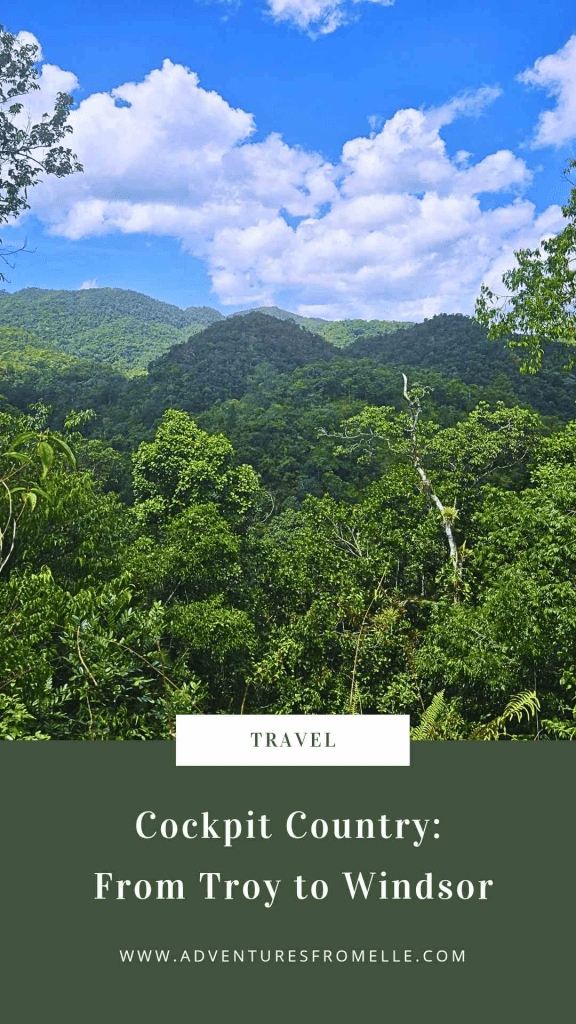
When most people think of Jamaica, they picture white sand beaches but 50% of the island is rugged and mountainous. Jamaica’s largest mountain range is the Cockpit Country which is three times the size of the Blue & John Crow Mountains, spanning 780km2 and five parishes. Cockpit Country got its name from its unusual karst landscape, where steep-sided limestone hills and deep valleys create a terrain that looks like the cockpits of old ships, or an upturned egg carton if you will. Before this hike, the closest I’d come to visiting the Cockpit Country was to Accompong, a Maroon village located on its outskirts. Why? The Cockpit Country is one of the most inhospitable places in the world. However, when an invitation came to hike the forgotten Troy to Windsor trail which traverses the Cockpit Country, I accepted. Here’s how this adventure went.
Before we get started, subscribe for new adventures from Elle.
Also, check out my book and GetYourGuide storefront for more travel ideas.
Spending the Night in Windsor
To ensure an early start the following morning, we spent the night in Windsor at The Last Resort, a witty name for a dilapidated off-grid hostel with basic amenities but sans phone signal. However, getting to Windsor from Kingston was no easy feat. After exiting the A1 highway, road conditions quickly deteriorated to narrow roads and muddy tracks but the drive was part of the experience. We had unreliable data connection after passing the Chukka Outpost at Good Hope, and had to rely on passersby for help with directions. It’s a good thing we did as GPS would’ve led us to a flooded road which we confirmed with multiple people. The only passable route to Windsor at the moment goes through Sherwood Content, a remote village and the birthplace of world-record holder and sprinter Usain Bolt. Bolt’s family still lives there, and he has invested millions into the community’s development– it shows. You’ve arrived in Windsor when you get to Dango’s shop, or what’s left of it. Dango was the warden of the Windsor Cave, a large 3km-long cave with interesting stalactites, stalagmites and a significant bat population.
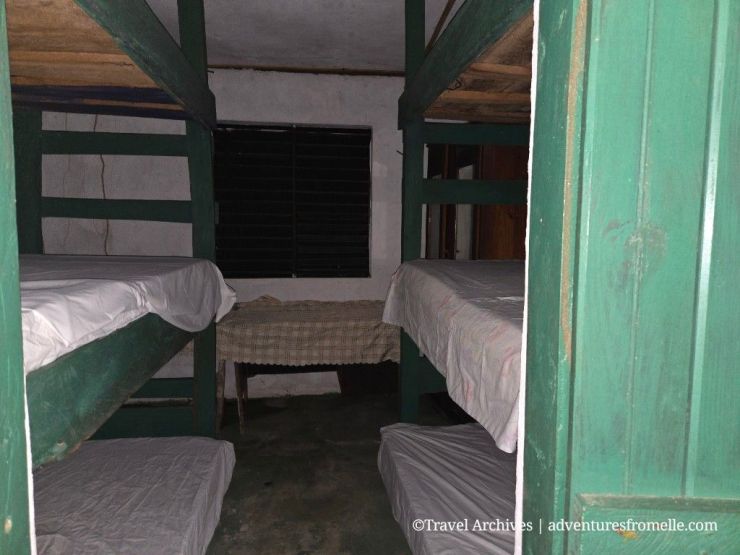 Bunk beds at the Last Resort
The Windsor Great House
 Windsor Great House
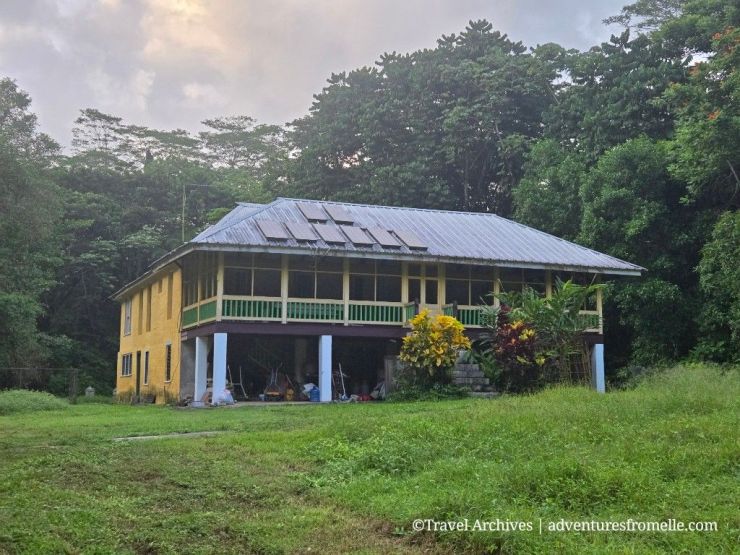
There are fewer than ten remaining houses in Windsor, but the original 5,500-acre Windsor estate in Trelawny dates back to the 1600s as a cattle pen. Windsor was strategically built at the north end of the Troy-Windsor trail to provide British soldiers with easier access to the Cockpit Country in which the Leeward Maroons (runaway enslaved people) sought refuge. After Emancipation, the land was divided and changed owners a few times until it was sold to the Kaiser Bauxite Company in 1959 and used for the resettlement of farmers displaced by bauxite mining in St. Ann. Eventually, the Windsor Great House was bought by a private owner in 1986 and has been used as a home, research centre and lodging since. Meals can be provided on request. We accidentally stumbled upon the Windsor Great House before reaching Last Resort, but were quickly set on the right path.
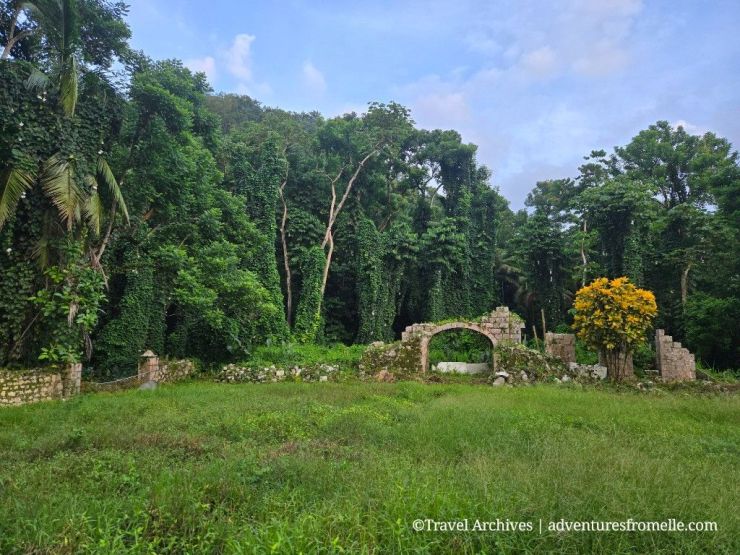
The Windsor Great House is constructed of square-cut stone that has been coated with stucco and painted yellow. The house has wooden trim, arched doorways and a stone staircase that leads to an expansive porch. The first floor had gun ports for defense against rebellious slaves and Maroons. Ruins to the rear of the house are from the original buildings built during the Maroon Wars spanning 1739 and 1795.
Getting to Troy
At 5am, we drove from Windsor to Troy for the hike. This drive lasted 3+ hours because of the poor road quality, and a stop for breakfast. The route led us through quaint historical villages with many old stone churches: Sherwood Content, Duanvale, Haddington, Clark’s Town, Jackson Town, Alps, Ulster Spring, Albert Town, Warsop, Troy and Tyre. The community names are interesting too; there’s even one called Peru– two continents crossed off on one bumpy country road, ha!
The Troy to Windsor Trail
We started the trail a little further up the road from Troy in a hamlet called Tyre. The Troy to Windsor trail is 26km long, and was built by British soldiers in the 1700s to traverse the Cockpit Country and suppress the Leeward Maroons. It also gave the British control over two important sources of water: the head of the Martha Brae river at Windsor and the springs of Booth and Tyre. Because of the Cockpit Country’s karst topography, most water runs underground far below what can be accessed with wells, and except for the perimeter, water can be scarce. Months were spent building this trail with packed stones and embankments across the thick forest dimpled with hundreds of limestone hills, all in an attempt to drive a few dozen runaways back to slavery. But, the hot humid forest with its omnipresent bugs claimed many lives; the average life-span of British soldiers was 3 years after their arrival in Jamaica. The mission was also unsuccessful; the British were forced to sign a peace treaty with the Maroons and grant them their freedom with conditions. Today, the trail is heavily overgrown, swallowed up within weeks of being cleared but it’s impressive that what they built 300 years ago still survives.
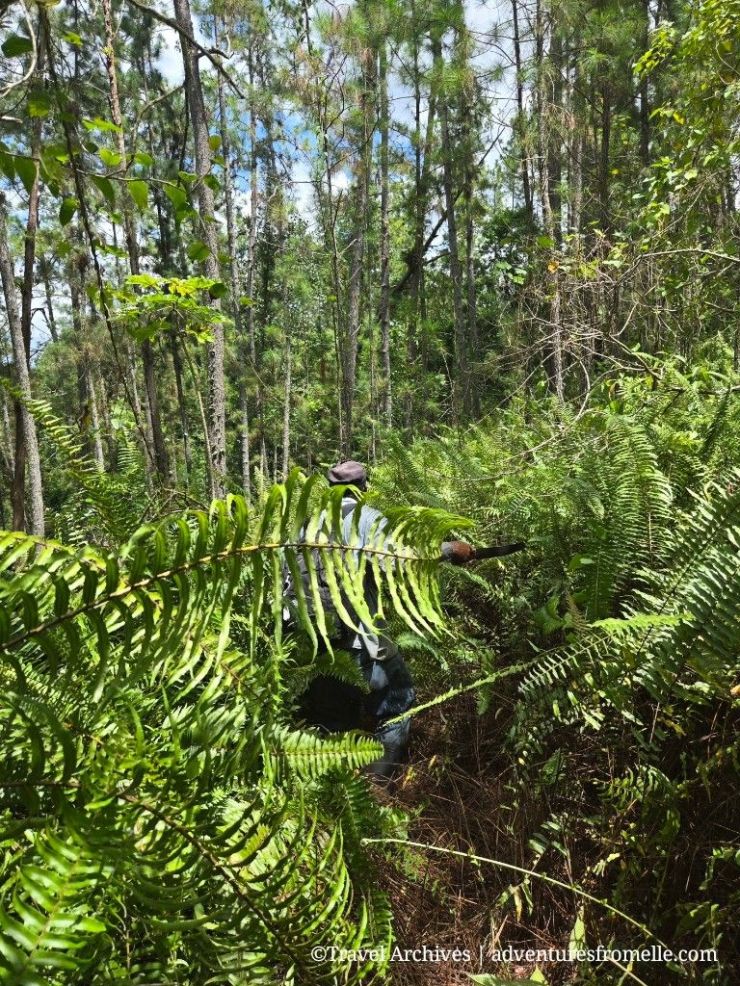
Unfortunately, we started the trail later than planned and it was slow going because we had to clear the path as we went. We had to contend with ferns taller than our heads, diabolical prickly plants known locally as cowitch, thousands of mosquitoes, millipedes, jagged limestone rocks and gnarly tree roots. But, this is the wild untamed side of Jamaica that few ever see so I felt grateful to be here, led by our trusted guide who knew the trail like the back of his hand. The largest wildlife we spotted were two snakes, one of which was found dead. Otherwise, there was nothing bigger than birds, frogs, lizards, molluscs and insects to find. Things were fine until came a heavy drenching downpour, washing away our morale. The rain limited visibility and muddied the trail, making an already narrow and treacherous hike even worse. I was soaked to the bone and my shoes gave up– thankfully, they saw me through until the end of the journey.
Between the rain, overgrown state of the trail, our late start and a few stops to: identify species (we had biologists in the group), mark the trail and tend to thankfully minor injuries sustained by a few members, night caught us on the trail. Nightfall comes early in the Cockpit Country. We lost our way a few times in the dark, adding an extra hour to our walk but in the end, we made it back to Windsor after 26 kilometers and 11 hours. My hike to Acatenango in Guatemala was more grueling but this was still not a walk in the park. Here are my top tips for anyone interested in hiking Troy-Windsor:
- A guide is a MUST. You will get lost otherwise. Please reach out if you’d like contact information.
- Begin the trail no later than 7am to make it out before nightfall. Hiking the Cockpit Country at night is not safe with its karst terrain, not even with the brightest headlamp or flashlight. You need natural light.
- Bring food & 3L of water per person per day.
- Travel as light as possible.
- The group needs multiple sharp machetes to clear the trail.
- Book overnight accommodation in the surrounding communities. A day trip is too strenuous.
- Pack raingear.
- Wear shoes with good grip.
Cockpit Country Under Threat
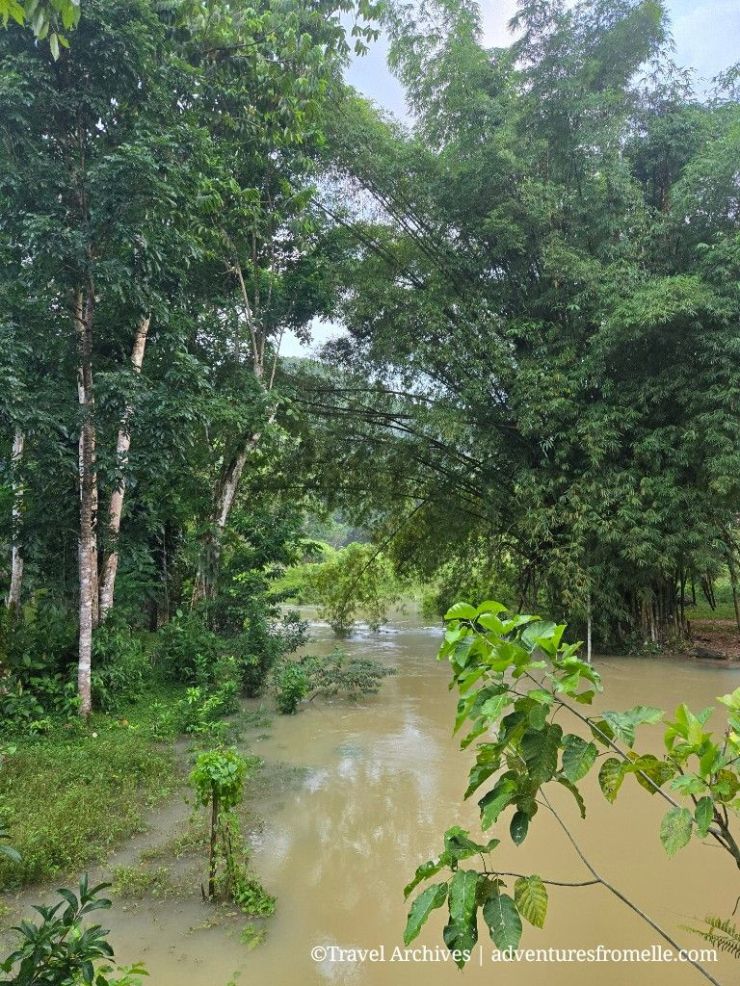 Martha Brae river, brown from recent heavy rains
The Cockpit Country is unlike any place I’ve ever visited— hot, humid, dense jungle covering innumerable hills and hillocks. But, this rugged inhospitable place once carried whispers of freedom for my ancestors– first the Tainos, Jamaica’s original inhabitants, and later, enslaved Africans which became known as the Leeward Maroons. Thanks to the rugged terrain, they successfully resisted British forces and negotiated treaties that granted them freedom long before slavery was abolished. The Cockpit Country supplies nearly 40% of Jamaica’s fresh water, and is one of the most biodiverse regions in the Caribbean. Endemic birds like the black-billed parrot and giant swallowtail butterfly thrive here, alongside rare orchids, lizards and other species you won’t find anywhere else in the world. In fact, 101 of Jamaica’s 400 endemic species can be found here. The Cockpit Country faces threats from logging and mining, but locals and environmental groups are actively fighting back. The Cockpit Country was recently added to UNESCO’s World Heritage Convention’s tentative list for inscription, so hopefully this step will aid in its preservation for future generations.
Wrap Up
The Cockpit Country in Jamaica’s wild interior tells a story of resilience, freedom and natural wonder as only three trails traverse the Cockpit Country: the Troy-Windsor, Quickstep and Heading-Pantrepant trails. These trails are only for seasoned hikers, and a guide is mandatory for safety but hiking the Cockpit Country is an unforgettable adventure. Have you ever visited the Cockpit Country or would you like to? Sound off in the comments section below!
If you enjoyed this post, you may also like:
- Jamaica’s Top 10 Hikes
- Jamaican Stereotypes Debunked
- Interesting Jamaican Place Names
- A Guide to Jamaica’s Blue Mountains
Before you go, don’t forget to subscribe. ‘Til next time.
Find Elle on Facebook, Instagram & lend your support to keep me on the road.
 English (US) ·