
 6 months ago
63
6 months ago
63
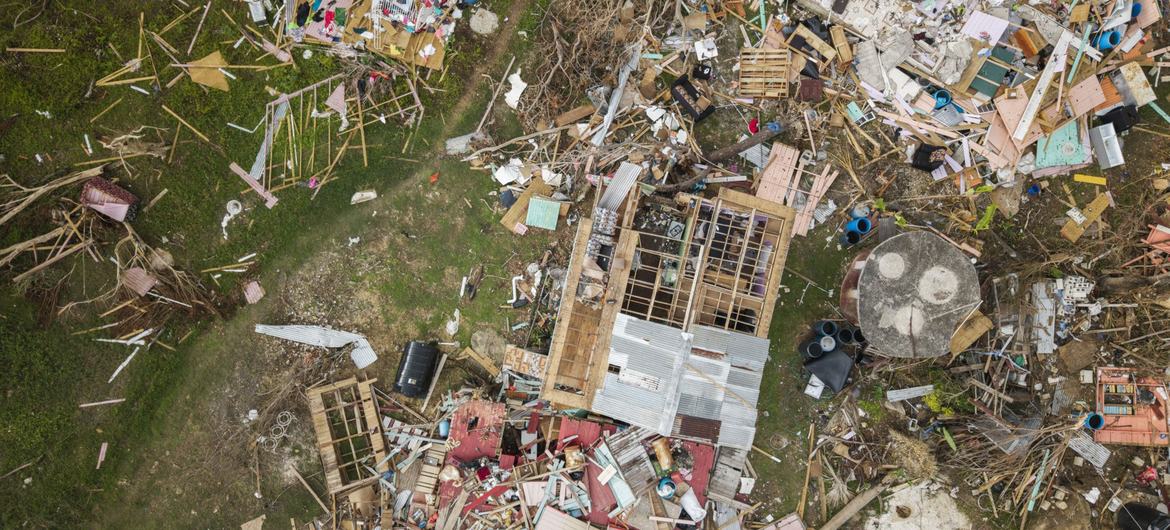 © IOM/Nicholas Renford Homes in Westmoreland, Jamaica, were devastated by Hurricane Melissa.
When the Minister of Finance opens Jamaica’s Budget Debate this week, the disclosure of further details on the establishment of Jamaica’s National Reconstruction and Resilience Authority (NaRRA) must be the main priority. Jamaica can ill afford any delays in its operationalization.
NaRRA will be mainly funded by the proceeds from Jamaica’s disaster risk insurance instruments, which were automatically and swiftly triggered because of Hurricane Melissa’s unprecedented intensity. It will initially be a department that reports directly to the Cabinet of Ministers, after which legislation will be brought to Parliament to establish it as a standalone statutory body. NaRRA is a modern reprisal of the Office of National Reconstruction (ONR), which was set up to spearhead recovery efforts in the aftermath of Hurricane Ivan more than two decades ago.
The scale of Hurricane Melissa’s destruction, however, necessitates an expanded scope for NaRRA, with almost US$9 billion in physical damage and an additional US$3.5 billion in direct and indirect production losses, coupled with initial government spending on relief and recovery. Therefore, the total economic impact attributable to Melissa is approximately J$2 trillion — or half of Jamaica’s annual economic output in a single year. It is by far the costliest natural disaster in the country’s history.

This estimate, however, does not include the cost to rebuild more resiliently and to harden physical infrastructure in preparation for future weather events, which are expected to become even more frequent and severe. NaRRA is tasked with determining the best way to achieve this over the next few years, though it is not anticipated that it will be a permanent feature of government. That may have to be reconsidered given NaRRA’s raison d’être — the inadequacy of the existing public sector apparatus to effectively manage recovery efforts of this scale with the requisite speed and agility.
The cost of rebuilding
Prior to the hurricane, the government had established a proven track record of fiscal discipline and policy credibility, which helped engender a coordinated international response. Notwithstanding this progress, the most significant issue complicating fiscal planning was the absence of meaningful economic growth, partly owing to the inability to fully execute the country’s capital expenditure budget. Capacity constraints were cited as the primary reason, as the government’s infrastructure ambitions outstripped the ability of current suppliers and contractors to deliver. The issue was not primarily about funding. As the country consolidated its fiscal accounts over the last decade and a half, more space was created in the budget, enabling greater proportions of tax revenues to be directed toward growth-enhancing spending.
For the last four fiscal years, however, the mismatch between financing and capacity became more apparent, as some of the monies allotted for capital expenditure had to be returned to the country’s Consolidated Fund due to the inability to exhaust this side of the budget. In some instances, up to a quarter of the allocated amount remained unspent, and preliminary allocations had to be revised downward in supplementary budgets.
NaRRA must overcome these issues with accelerated procedures for all stages of the construction project cycle. Jamaica’s Planning Institute has indicated that the initial decline in economic growth in the last quarter of 2025, when Melissa hit, was not as steep as previously forecast. This potentially augurs well for a slightly faster recovery period. However, Jamaica is still not expected to return to pre-Melissa levels of economic output for at least another three years.
This strain is evident in Jamaica’s fiscal profile in the medium term. The country will run a deficit each year for the next four years, ranging from 1.8% to 4.9% of Gross Domestic Product (GDP). During the same period, economic growth is expected to reach a peak of 3% before declining to its long-run average range of 1–2% per year.
As the magnitude of Jamaica’s fiscal deficits will mostly exceed its current projections for growth, the country will take longer to return to a balanced budget and, subsequently, fiscal surpluses. This could eventually necessitate additional fiscal measures to finance the gap over its extended duration. Additional taxes, expenditure cuts, or further borrowing each carry their own risks, and none is likely to be socially or politically popular.
Jamaica must therefore grow its way out of this situation. However, reducing the arrears will require substantially higher levels of growth than the country has historically been able to attain.
Completing projects, not just starting them
Growth will rest on the ability to complete projects on time and within budget. Delays and cost overruns present a drag on output. GDP growth represents the change in the final value of goods, services, and economic transactions. Therefore, growth is not recorded when new projects are merely started or in progress, but when they are shepherded through to completion.
Jamaica has programmed a doubling of its capital expenditure for the upcoming fiscal year to almost J$100 billion. The country’s recently formed Independent Fiscal Commission (IFC) — the equivalent of the Congressional Budget Office (CBO) in the United States — has described the target as “overly ambitious” given Jamaica’s chronic under-execution of its capital budget.
Beyond overseeing public infrastructure development, NaRRA must also have a mandate to facilitate private investment. Jamaica’s US$6.7 billion suite of international assistance from its multilateral development partners includes US$2.4 billion earmarked for the private sector. Specific details regarding how this funding will be spent remain limited. However, it is expected that the country will utilise the technical expertise component of this assistance package for the design and operation of several Public-Private Partnerships (PPPs) across a range of infrastructure assets.
The Jamaican government prudently made provisions for recovery as its Disaster Risk Management Framework ensured immediate liquidity support to cushion the expected initial fallout in revenues from the hurricane. In recent years, it has also established a Climate Finance Unit within the Ministry of Finance to embed greater climate resilience in fiscal planning. Current circumstances, however, demand that Jamaica go several steps further for the long term.
Key vulnerabilities exposed by the hurricane — including insecurity of land tenure, sub-optimal spatial and urban planning, and the heightened volatility of climate shocks — will have to be addressed. More innovative financing instruments will also need to be developed to attract local investor participation in climate-proof infrastructure. New channels will also need to be activated to attract and deploy private capital, enabling the private sector to fund restoration and resilience projects.
Finally, viable strategic partnerships must be developed while recalibrating and further leveraging Jamaica’s fiscal framework to ensure continued credibility and sustainability in the face of more powerful climate events. NaRRA represents only the start.
Keenan Falconer is an economist with experience across Jamaica’s public and private sectors and the multilateral financing space. Send feedback to keenanjfalconer20@gmail.com.
 English (US) ·