
 8 months ago
108
8 months ago
108
Eugene Hyde occupies a distinctive and enduring place in the development of modern Jamaican art. Working during a formative period in the island’s cultural history, Hyde was part of a small but influential group of artists who helped shape a professional, internationally engaged visual art movement in post-war Jamaica. Though often described as reserved in temperament, his contribution was neither marginal nor incidental. Through disciplined practice, institutional involvement, and sustained experimentation, Hyde helped establish the foundations upon which Jamaican modernism took hold.
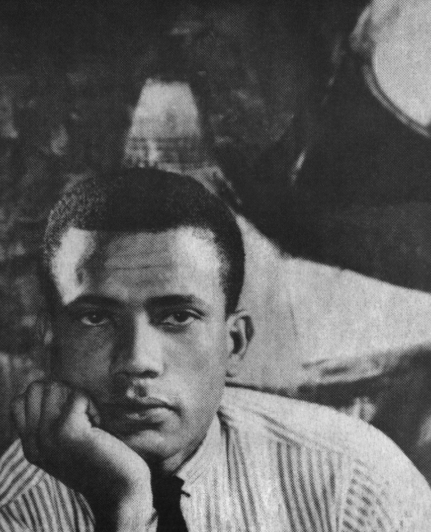 Image from Eugene Hyde: A Retrospective – Exhibition of the Family Collection.
The Boy from Coopers Hill
Eugene Seidel Hyde was born on January 25, 1931 in Coopers Hill, Portland, Jamaica, into a household familiar with visual practice as his father, John Hyde, was a respected photographer in Port Antonio. His mother later recalled that he showed an early interest in visual expression and, from as young as nine years old, would draw and paint for hospitals, nurseries and schools in the local community.
Hyde attended Titchfield High School in Port Antonio before moving to Spanish Town, where he studied at Beckford and Smith’s, now St. Jago High School. Largely self-taught in his early years, he learned to draw by copying images from art books, particularly those focused on the human figure. In 1948, he began his career in advertising as a graphic artist, marking the start of his professional engagement with visual communication.
Seeking to expand his skills and pursue a career as a fine artist, Hyde left Jamaica to study in the United States. Between 1953 and 1955, he studied Advertising Design at the Art Center School in Los Angeles, before continuing at UCLA, where he pursued graphic design and advertising, as well as postgraduate studies in architectural ceramics.
This period of study exposed him to modernist abstraction, design theory and interdisciplinary approaches to visual form that would later inform his artistic practice. On his return to Jamaica in 1963, he began teaching at the Jamaica School of Art, now the Edna Manley College of the Visual and Performing Arts.
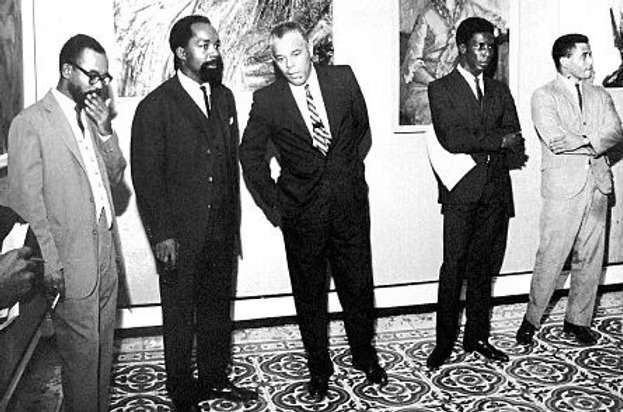 Pictured from left: Karl Parboosingh, Barrington Watson, A.D. Scott , Rex Nettleford and Eugene Hyde at the August 9, 1964 opening of the CJAA, the Contemporary Jamaican Artists Association.
The Founding Trio
Hyde’s return coincided with a period of cultural transition, as Jamaican artists increasingly sought new visual languages to express a modern national identity. In 1964, he became a founding member of the Contemporary Jamaican Artists’ Association (CJAA), alongside Karl Parboosingh and Barrington Watson. The Association emerged at a pivotal moment, challenging conservative expectations of Jamaican art and affirming the legitimacy of modernist experimentation, abstraction and professional exhibition practice.
As art historian Veerle Poupeye observed, Parboosingh, Watson and Hyde “belonged to a generation of artists who fundamentally challenged prevailing ideas of what Jamaican art could be.”
Through the CJAA, Hyde and his peers exhibited widely both locally and internationally, helping to position Jamaican contemporary art within global artistic conversations rather than confining it to regional or folkloric frameworks. Though stylistically diverse, their collective efforts have since been recognised as “the pivotal factors for Jamaican art to really enter the twentieth century.”
Hyde’s contribution within this trio reflected his broader practice: disciplined, forward-looking and institutionally engaged, with a clear commitment to expanding both the reach and seriousness of Jamaican art. This commitment later found concrete expression in his role as a co-founder of The Gallery, one of Jamaica’s earliest dedicated spaces for contemporary art exhibitions
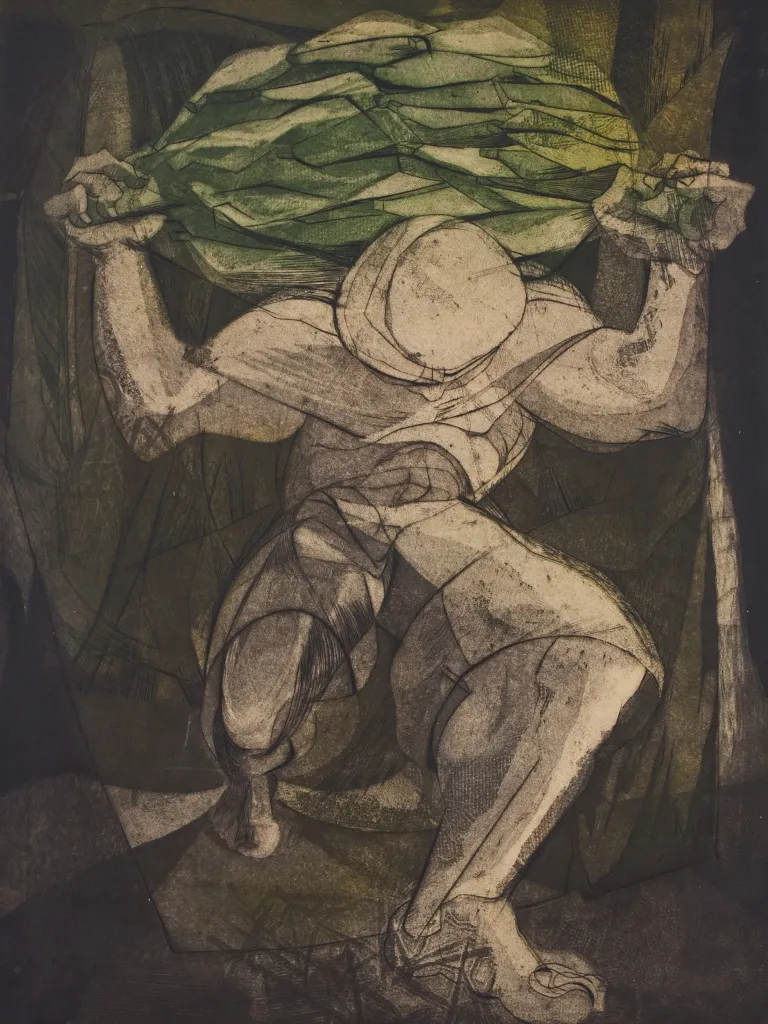 Bunch Fruit (1959)
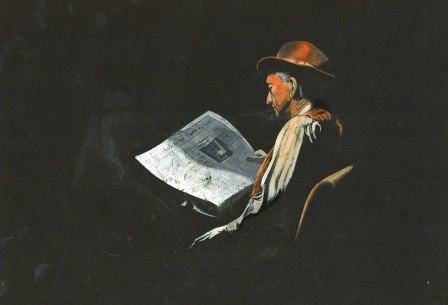 Man Reading paper (1953-55)
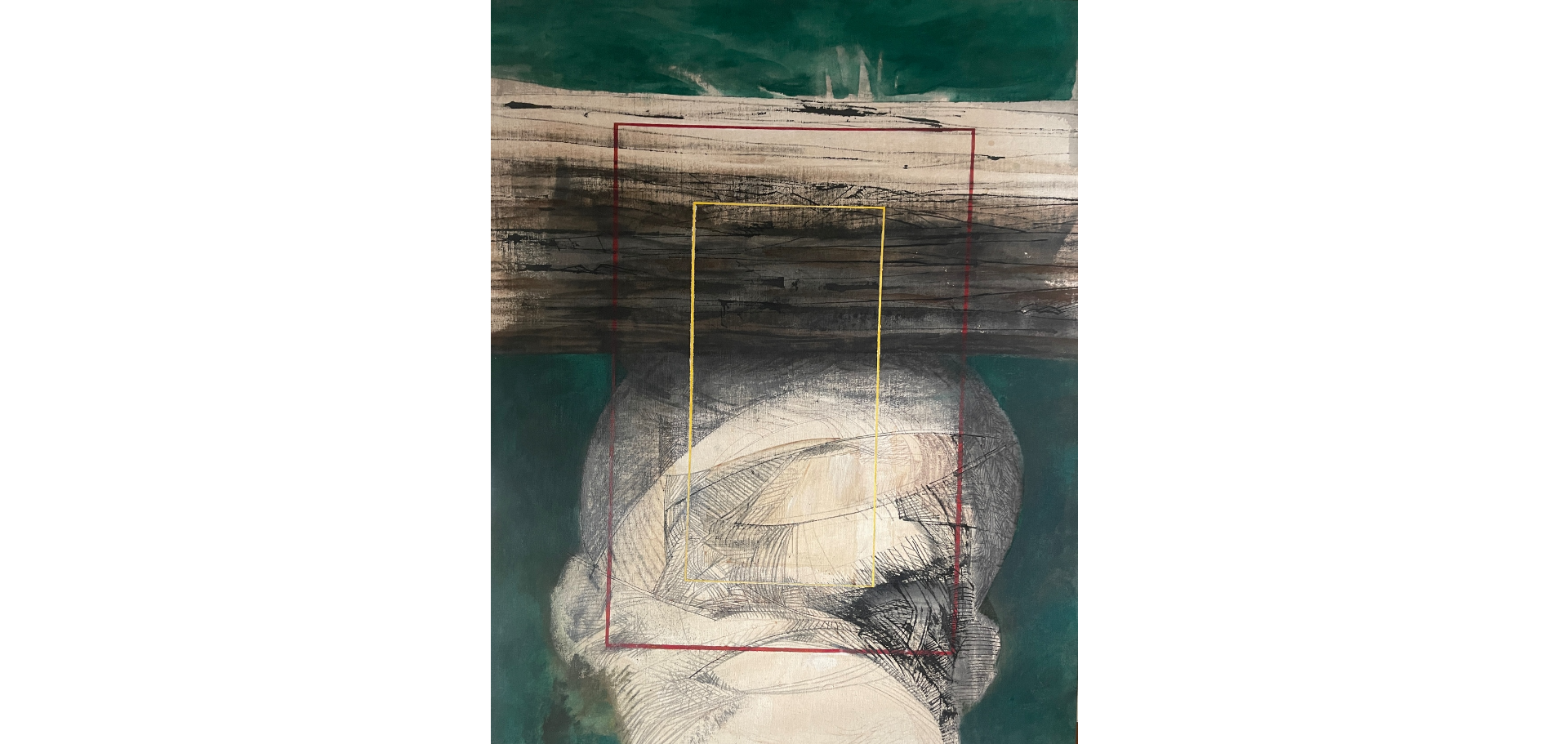 ‘Brambles’, circa 1970s
A Multi-Disciplined Artist
Hyde’s work is characterised by a strong sense of structure, disciplined drawing and a measured engagement with abstraction, often balancing figurative elements with formal experimentation. His paintings frequently explored the human figure, still life and symbolic forms, rendered through controlled colour palettes and carefully constructed compositions. Rather than pursuing spectacle or overt expressionism, Hyde favoured a thoughtful, methodical approach to visual problem-solving.
Across his practice — which encompassed painting, drawing, printmaking, mixed media, lithography and etching — Hyde demonstrated a sustained concern with composition, spatial organisation and process. His ideas were often developed through series rather than singular, iconic works. Bodies of work such as the Children Series reveal a sensitivity to line and gesture, while later works, including the Sunflower Series and Pre-Casualty Series, reflect a growing interest in metaphor, tension and abstraction, informed by his exposure to modernist art and design theory.
Hyde’s parallel career in design and advertising reinforced this disciplined approach. His training and professional experience encouraged clarity, precision and structure, qualities that are evident throughout his fine art practice. This dual engagement — moving between commercial design and studio work — shaped an artistic language that was both rigorous and adaptable, positioning Hyde as a practitioner deeply concerned with how images function, communicate and endure.
Explore the full publication: Eugene Hyde: A Retrospective – Exhibition of the Family Collection
A Short But Impactful Career
Hyde’s untimely death in 1980 brought an abrupt end to an artistic career that, though relatively short, had already played an important role in shaping the development of Jamaican art. Beyond individual works, his legacy lies in the standards and structures he helped establish.
Though quieter in disposition than some of his contemporaries, Hyde’s influence was deeply felt within the artistic community, particularly through his emphasis on discipline, professionalism and international engagement. In 1983, this contribution was formally recognised when he was awarded the Silver Musgrave Medal posthumously by the Institute of Jamaica, acknowledging his enduring place within the country’s artistic history.
In recent years, renewed attention has been brought to Hyde’s work through retrospectives and family-led efforts to reintroduce his art to the public. Speaking in the context of a recent exhibition, Hyde’s family expressed the hope that “exposing more of his work will allow Jamaicans to better understand his contribution to the country’s art history.” This renewed visibility has prompted a reassessment of Hyde’s place within Jamaica’s modern art canon, highlighting the depth, consistency and enduring importance of his contribution.
 English (US) ·