
 8 months ago
84
8 months ago
84
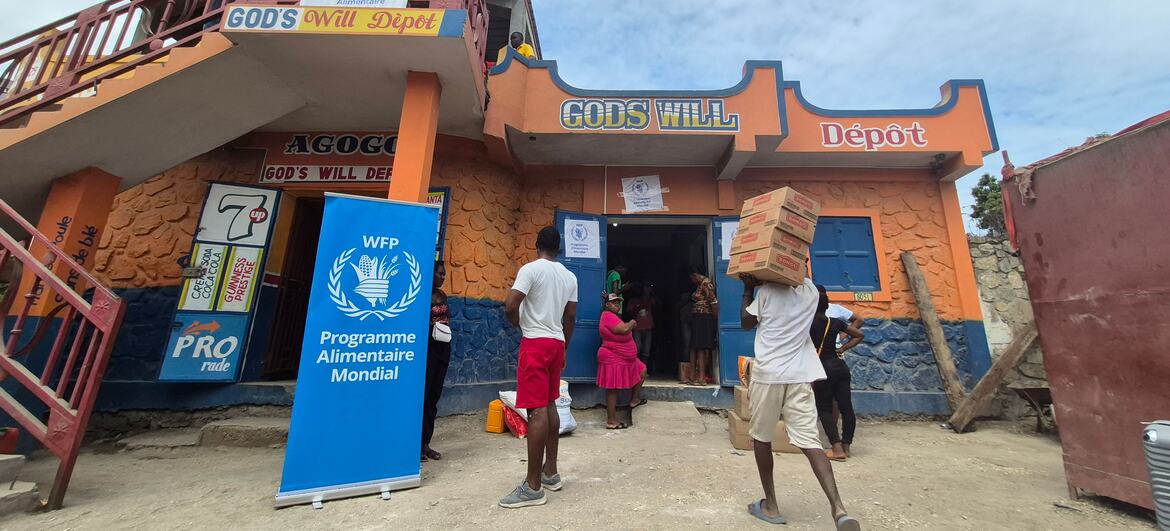 © WFP/Sylvain Barral Families in southeastern Haiti receives food assistance through a voucher system at a local store.
Standing outside a bustling shop in southeastern Haiti, Ketia surveys the groceries she has just purchased: a sack of flour, packages of spaghetti, boxed milk, and bars of soap. For her and her family, these items represent not just sustenance, but a return to some sense of normalcy after Hurricane Melissa swept through the Caribbean in October, destroying homes and livelihoods.
Ketia and her husband, both teachers, lost everything in the storm, from furniture to their car. They are now among roughly 225,000 people receiving support from the UN World Food Programme (WFP) through a voucher system that allows families to buy essentials from selected local retailers.
“The shop is using an electronic system which records transactions, and WFP pays the retailer,” explained Channon Hachandi, Head of Supply Chain for WFP Haiti. “It’s a good method to support affected families, because instead of receiving aid at a distribution, the recipient acts like a normal shopper, going to the market.”
 © WFP/Sylvain Barral
Even before the hurricane, more than half of the residents in the hardest-hit areas faced acute food insecurity. The storm killed more than 40 people and caused extensive damage to homes, businesses, and farmland, leaving a near-total loss of crops in a region reliant on small-scale agriculture.
WFP responded before, during, and after the hurricane. Early warning texts reached 3.5 million people, cash payments helped households prepare, and emergency rations were distributed to families in temporary shelters during and immediately after the storm.
Now, the agency is shifting toward longer-term recovery, providing cash and vouchers to give families “the dignity of choice,” according to Wilfred Nkwambi, WFP’s Head of Programmes in Haiti. About 10 per cent of those receiving post-storm assistance currently benefit from the voucher programme, which WFP hopes to expand.
“The voucher system not only helps recipients, it also supports local businesses,” Nkwambi said. “In this shop alone, eight people are employed for distributions. Across five other shops, about 40 people, mostly women and young people, are now earning an income.”
Day labourers are also hired for logistics, further boosting the local economy. WFP said the approach transforms aid into a driver of economic recovery while reinforcing resilience and dignity for affected communities.
“Thanks to the food voucher distribution, we won’t go hungry in the coming weeks, and we have the chance to start rebuilding our lives,” Ketia said, loading her groceries onto a motorcycle taxi and heading home.
 English (US) ·